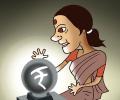
RBI Governor Sanjay Malhotra stated it is "premature" to discuss the implementation of Merchant Discount Rate (MDR) for digital payments, advising a "wait-and-watch" approach. He emphasised that investment in public payment infrastructure is necessary and someone must bear the cost, whether through taxes or MDR. The government is currently working on amendments to relevant statutes, and the RBI is focused on strengthening this infrastructure.
Finance Minister Nirmala Sitharaman clarified that the Merchant Discount Rate (MDR) on digital transactions applies to merchants, not customers, and aims to support banks and fintech in infrastructure investment. She countered Congress leader Jairam Ramesh's claims, stating that a committee will decide on MDR only after Parliament passes the Taxation and Other Laws (Amendment) Bill, 2026, a process currently stalled by parliamentary disruptions.

The National Payments Corporation of India (NPCI) has deferred the implementation of a 0.4 per cent Merchant Discount Rate (MDR) on Person-to-Merchant (P2M) UPI payments above Rs 2,000, originally set for October 15, until after Diwali.

Apple Pay is now available in India. Here's how you can add an eligible credit card to Apple Wallet and make payments using your iPhone.

RBI's exercise will take into account standards of governance, the viability of the payment bank (PB) business model, and changes, if any, if needed.

A report by IIT Bombay suggests that the proposed Merchant Discount Rate (MDR) framework for Unified Payments Interface (UPI) transactions needs rationalisation before implementation to safeguard public trust in the digital payments system, highlighting that UPI's long-term economic benefits outweigh potential incremental income from merchant fees.
The National Payments Corporation of India (NPCI) has deferred the implementation of a 0.4 per cent Merchant Discount Rate (MDR) on Person-to-Merchant UPI transactions above Rs 2,000. Originally set for October 15, the new date will be announced after Diwali, providing relief to users and merchants, especially during the festive season. The decision came amidst opposition concerns about the levy burdening consumers.

Festival shoppers are increasingly turning to EMIs and other affordability options for high-value purchases, especially beyond metro cities.

HDFC Bank's shares experienced a dip on Wednesday after a newspaper report alleged that the bank made illegal payments to the Maharashtra State Road Development Corporation to secure large deposits, raising concerns about corporate governance.

The Indian government has clarified that consumers will not be charged for UPI transactions, and most merchant transactions will also remain free. This comes amidst speculation following an amendment to the Payment and Settlement Systems Act, 2007. Any future merchant discount rate (MDR) would be nominal, threshold-based, and aimed at ensuring UPI's long-term sustainability and infrastructure development.

'Resolution plan with this much haircut is totally unviable.'

Apple Pay has officially launched in India, integrating with CCAvenue and partnering with Axis Bank to bring secure and convenient mobile payment solutions to millions of iPhone, iPad, and Apple Watch users across a vast network of merchants.

IDFC First Bank has integrated with ICEGATE 2.0 to enable digital payment of customs duty, central excise, and service tax for its customers.

Sashidhar Jagdishan, the managing director and CEO of HDFC Bank, has announced his decision not to seek reappointment and will retire at the end of his current term on October 26, concluding a six-year tenure marked by significant regulatory and governance challenges, including RBI restrictions, a major merger, and scrutiny over alleged illegal payments.
UPI transactions saw a 27% volume increase and 20% value increase in the first half of the current fiscal year. Despite a slight moderation in September, the digital payment system is set to implement a 0.4% merchant discount rate on transactions over Rs 2,000, aiming for a sustainable revenue model. Small merchants and person-to-person payments remain exempt, and UPI's global presence continues to expand.

The goal is to ensure that your bank works for you, providing liquidity and convenience without charging you for the privilege of holding your own money.
The Delhi Metro Rail Corporation has partnered with Airtel Payments Bank to launch co-branded RuPay National Common Mobility Cards (NCMC), enabling seamless payments across various transit networks nationwide.
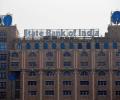
State Bank of India (SBI) anticipates that the newly introduced Merchant Discount Rate (MDR) on person-to-merchant (P2M) UPI transactions above 2,000, effective October 15, will enable it to recover the costs incurred in processing and facilitating these transactions, potentially even generating a small surplus.

The Reserve Bank of India's recent measures, including a dedicated dollar window for state-run oil marketing companies and tightened foreign exchange derivative rules, are expected to provide near-term relief to the rupee's depreciation, but market participants believe global factors and balance of payment dynamics will continue to exert pressure in the medium term.

Payments banks are expecting to get the rights to offer small-ticket loans sometime soon, according to an industry source familiar with the matter. The industry has been in talks with the Reserve Bank of India (RBI) for some time in seeking lending rights.

RBI Governor Sanjay Malhotra reiterated India's cautious stance on cryptocurrencies due to concerns over monetary sovereignty and capital flows, while actively promoting underlying technologies like distributed ledger technology and tokenisation. He also addressed the global rise in public debt and hardening bond yields, attributing it to increased government and private spending, including that driven by AI, and noted the implications of global interest rates on India's monetary policy.

Economic think tank GTRI has urged the Indian government to withdraw the proposed UPI charges, set to begin on October 15, arguing that the digital payment system should remain free for merchants and consumers. GTRI warns that these charges could lead to higher prices, reduced earnings for small businesses, and weakened household demand, while also benefiting international card networks by eroding UPI's price advantage. The think tank also called for an independent audit of UPI's running costs.
Parliament was informed that UPI has onboarded 55.49 crore users by June 2026, with transactions reaching 24,162 crore in volume and Rs 314 lakh crore in value in FY 2025-26. The platform, operated by NPCI, is expanding internationally through NIPL, facilitating cross-border payments and assisting other nations in building similar systems. Significant efforts are also underway by the Government, RBI, and NPCI to enhance the security and transparency of UPI transactions, including risk-based limits, security frameworks, and public awareness campaigns against cyber-crime.

Finance Minister Nirmala Sitharaman clarified that the proposed Merchant Discount Rate (MDR) on select high-value UPI transactions is not a tax or cess, and its collections will not go to the government. She explained that MDR is a charge within the digital payments ecosystem, shared among participants to maintain infrastructure, and will not be passed on to consumers. The NPCI's new framework, effective October 15, applies a 0.4% MDR on person-to-merchant UPI transactions above Rs 2,000, with most transactions remaining free and small merchants exempt.
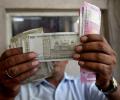
Government sources clarify that the 0.4% merchant discount rate (MDR) on UPI transactions above Rs 2,000, effective October 15, will not be passed on to consumers. The charge, paid by merchants, aims to create a sustainable revenue framework for the digital payments ecosystem, with funds shared among banks and UPI entities. Small merchants using QR codes for up to Rs 1 lakh monthly are exempt.

Fake web sites, counterfeit goods, bogus delivery charges and fraudulent customer support agents are common warning signs.
The Kerala Legislative Assembly has passed a motion urging the central government to completely withdraw the proposed Merchant Discount Rate (MDR) on UPI transactions exceeding Rs 2,000. Chief Minister V D Satheesan and CPI MLA K Rajan highlighted concerns that the MDR would increase business costs, harm small businesses, and reduce the appeal of digital payments, while the BJP argued it would not affect general public or small merchants.

Nandan Nilekani, co-founder of Infosys, has urged for the expanded adoption of the Account Aggregator (AA) framework to facilitate formal credit access for self-employed individuals and gig workers. He highlighted its potential to enable cash-flow-based lending by leveraging diverse data streams, moving beyond traditional asset-based lending, and fostering a more inclusive digital financial infrastructure in India.
Punjab & Sind Bank MD and CEO Swarup Kumar Saha clarified that merchants cannot pass on Merchant Discount Rate (MDR) charges to customers for UPI payments, ensuring consumers only pay the displayed price. The new MDR structure, effective October 15, applies a 0.4% charge on P2M transactions above Rs 2,000, with specific flat rates for certain sectors, but small-value transactions remain free.

Keralam police have issued a public caution against cyber fraudsters who use fake customer care numbers of banks and e-commerce platforms to deceive individuals and steal their personal and financial information. Fraudsters post fake numbers online, then contact victims posing as support agents, asking them to install remote access apps or make small payments to gain access to sensitive data.

At a time when the role of corporate boards is once again under the scanner, independent directors on the Paytm Payments Bank board have indicated that red flags were raised over regulatory issues but they may have been late in doing so. "As independent directors, we asked questions and monitored responses to the Reserve Bank of India (RBI). Many changes were made on compliances. "Obviously, in retrospect, it was not found to be enough," said one of the independent directors on the condition of anonymity.
The Congress party has questioned the Modi government's decision to defer the Merchant Discount Rate (MDR) on UPI transactions, alleging a potential "U-turn on the U-turn." Congress general secretary Jairam Ramesh highlighted previous denials by the finance minister regarding MDR imposition, only for it to be announced later and now deferred. He expressed concerns about future charges on UPI transactions.

'Existing borrowers who have surplus cash should make partial loan prepayments to offset the impact of rising EMIs and reduce the overall interest burden.'

75% of India's 60 million digital-payment merchants have never recorded a transaction above 2,000.

Zelle, a major US peer-to-peer payment service, is set to launch in India by the end of this year, marking its first international expansion. The move aims to tap into India's large remittance market, offering a service similar to UPI but integrated with bank apps. Zelle also introduced ZelleUSD, a stablecoin for future global payment capabilities.

India's balance of payments (BoP) recorded an $8.1 billion deficit in the first quarter of 2026-27 (Q1FY27), a significant increase from a $4.5 billion surplus in the corresponding period of the previous year, primarily driven by a sharp reversal in portfolio flows.

The Supreme Court has refused to grant an interim stay on the imposition of Merchant Discount Rate (MDR) on UPI person-to-merchant transactions exceeding Rs 2,000, which is set to take effect from October 15. The court has agreed to examine the challenge to this new fee and has issued notices to the Centre, RBI, and NPCI, seeking their responses within four weeks. A Public Interest Litigation (PIL) argues that the levy lacks statutory safeguards, transparency, and public consultation, and could adversely affect merchants and consumers.

A savings or current account with no customer-induced transaction for more than 24 months is classified as inoperative.

Maharashtra is grappling with an escalating drought crisis, with 305 talukas now declared drought-hit, prompting the state government to announce Rs 5,000 in financial aid for farmers before Diwali and extend comprehensive relief measures.

The Economic Offences Wing (EOW) of the Crime Branch Jammu has filed a chargesheet against two individuals, Manoj Kumar and Vikram Singh, in a financial fraud case involving over Rs 1.22 crore collected from investors in Samba district. The accused allegedly induced residents to invest in schemes from unregistered or de-registered NBFCs, promising high returns but failing to deliver.
